The paintings
Woods, fields, hills and uplands

Harry Thomas. Standing stones, Bwlch y Llo. Acrylic on board, 25 x 36 cm. AB2008_3
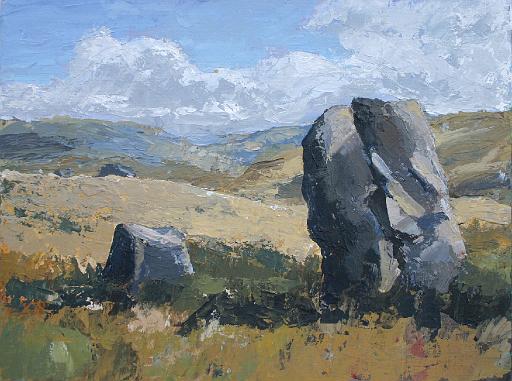
Harry Thomas. Standing stones, Bwlch y Llo (breezy day). Acrylic on board, 30 x 40 cm. AB2010_3

Harry Thomas. Big stone, Bwlch y Llo. Acrylic on board, 25 x 36 cm. AB2008_4

Harry Thomas. The bright field II (Gwar Cwm), 2008. Oil on canvas, 41 x 51 cm. OC2008_2

Harry Thomas. The bright field III (Dynyn). Acrylic on board, 30 x 40 cm. OC2010_1

Harry Thomas. May in the hills. Acrylic on board, 31 x 41 cm. AB2008_2

Harry Thomas. Hollow track, Summer, 2008. Acrylic on board, 30 x 40 cm. AB2008_4

Harry Thomas. Llangynfelyn Churchyard, 2007. Oil on canvas, 40 x 50 cm. OC2007_1

Harry Thomas. Woodland stream, April, early morning, 2007. Oil on canvas, 50 x 40 cm. OC2007_9
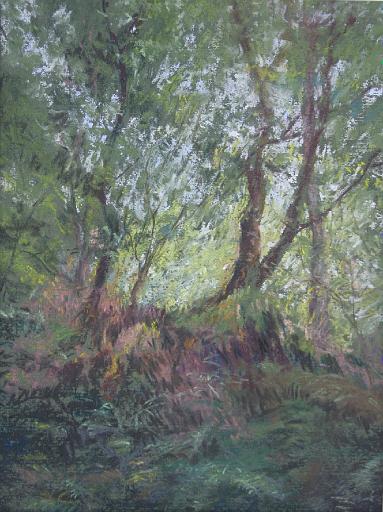
Harry Thomas. Rocky outcrop, Cwm Clettwr, 2004. Pastel on paper, 35 x 25 cm. PP2004_3
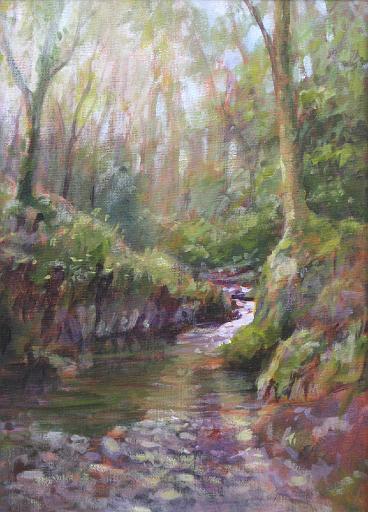
Harry Thomas. Woodland stream, Cwm Clettwr V. Acrylic on board, 35 x 25 cm. AB2008_16

Harry Thomas. Woodland sunflecks I. Oil on canvas, 60 x 30 cm. OC2007_7

Harry Thomas. Woodland sunflecks II. Oil on canvas, 61 x 76 cm. OC2007_19
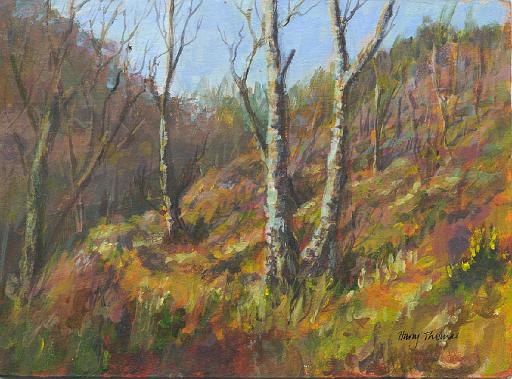
Harry Thomas. Birchwood, winter II. Acrylic on board, 15 x 20 cm. AB2008_6
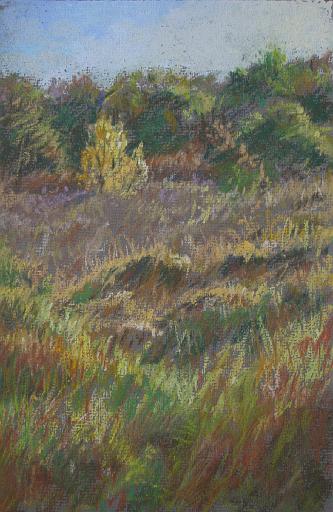
Harry Thomas. Autumn colours, Tir Stent, 2005. Pastel on paper, 23 x 15 cm. PP2005_5

Harry Thomas. Winter sun: distant trees, dead leaves, 2007. Oil on canvas, 30 x 40 cm. OC2007_3

Harry Thomas. Across Borth Bog, Winter, 2007. Oil on canvas, 60 x 76 cm. OC2007_11

Harry Thomas. Sunday market I. Acrylic on board, 30 x 40 cm. AB2010_7

Harry Thomas. Sunday market II. Acrylic on board, 30 x 40 cm. AB2010_7
Seascapes and cloudscapes
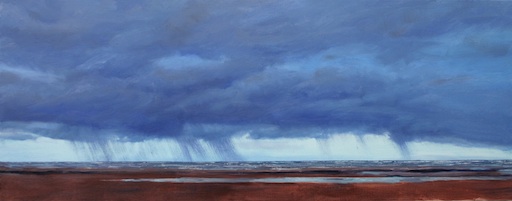
Harry Thomas. Thunderstorm, Ynyslas, 2007. Oil on canvas, 40 x 1050 cm. AC2007_4
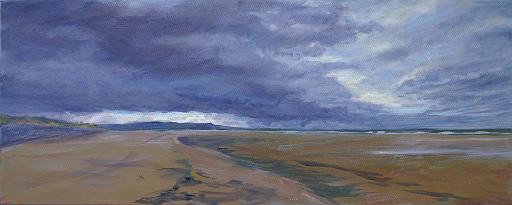
Harry Thomas. Borth from Ynyslas, 2008. Acrylic on canvas, 20 x 50 cm. AC2008_1

Harry Thomas. Clarach, Winter, 2008. Acrylic on canvas, 20 x 50 cm. AC2008_2
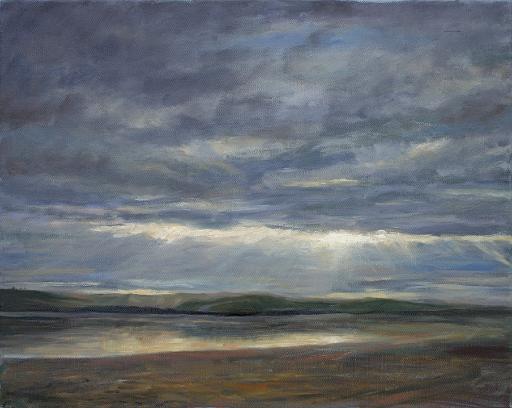
Harry Thomas. Sunrise, Ynyslas, 2008. Oil on canvas, 39 x 49 cm. OC2008_1

Harry Thomas. Dune II. Acrylic media on board, 13 x 18 cm. AB2009_2
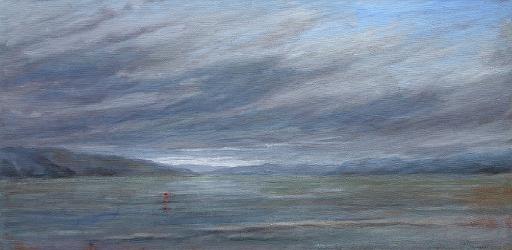
Harry Thomas. Dyfi Valley, storm clearing.. Acrylic on canvas, 30 x 60 cm. AC2009_1
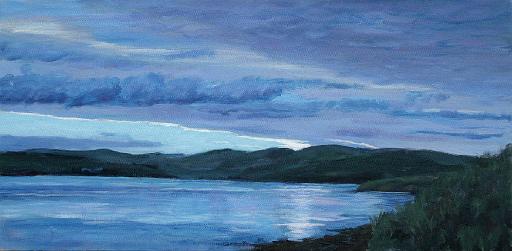
Harry Thomas. Sunrise over the estuary I (Tide in). Acrylic on canvas, 30 x 60 cm. AC2010_1
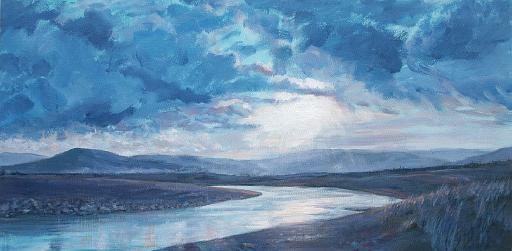
Harry Thomas. Sunrise over the estuary II (Tide out). Acrylic on canvas, 30 x 60 cm. AC2010_2
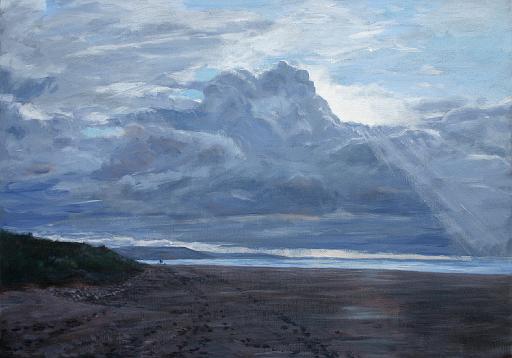
Harry Thomas. After the storm I (Couple walking dogs). Acrylic on canvas, 30 x 60 cm. AC2010_3
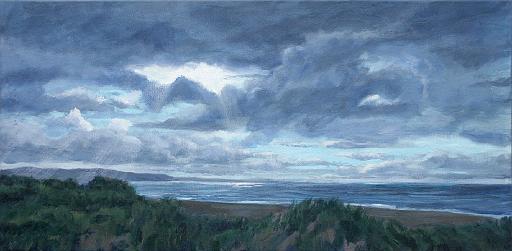
Harry Thomas. After the storm II (Over the dunes).. Acrylic on canvas, 30 x 60 cm. AC2010_4
Experiments

Harry Thomas. Constructed landscape (1), 2007. Oil on canvas, 30 x 40 cm. OC2007_15

Harry Thomas. Hollow track, Summer, 2008. Acrylic on board, 30 x 40 cm.
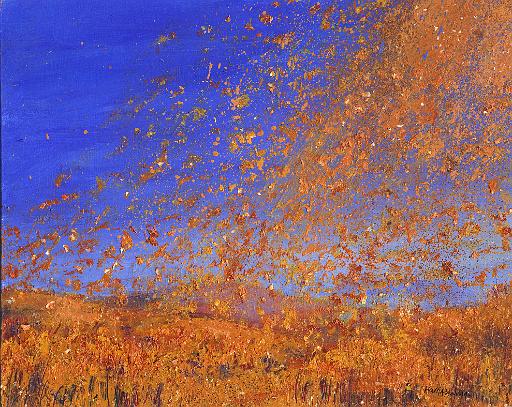
Harry Thomas. The golden grain (The Rubaiyat of Omar Khayyam, Q 15. E FitzGerald)..

Harry Thomas. Torrent, 2007. Mixed media on board, 18 x 12 cm. OC2008_11

Harry Thomas. Autumn track, 2007. Mixed media on board, 18 x 12 cm. AB2008_14
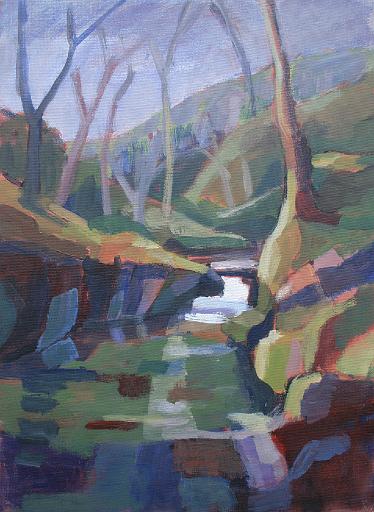
Harry Thomas. Woodland stream, Cwm Clettwr, reflections I. Acrylic on board, 35 x 25 cm. AB2010_5
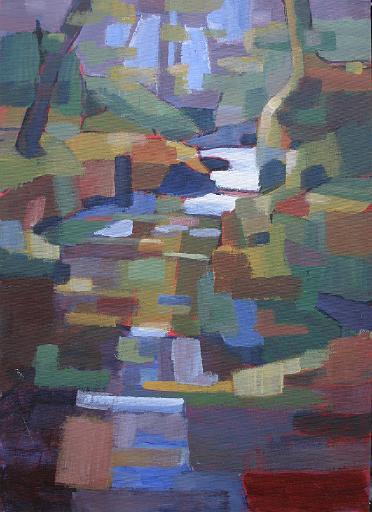
Harry Thomas. Woodland stream, Cwm Clettwr, reflections II. Acrylic on board, 35 x 25 cm. AB2010_6

Harry Thomas. Marloes I (ochre), 2011. Acrylic on board, 26 x 36 cm. AB2011_1

Harry Thomas. Marloes II (blue), 2011. Acrylic on board, 26 x 36 cm. AB2011_2
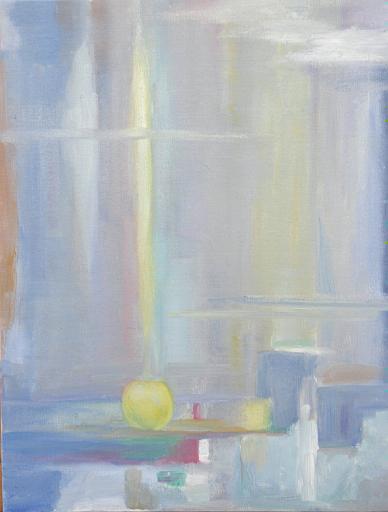
Harry Thomas. Anamorphic with apple (2), 2006. Oil on board, 46 x 35 cm. OB2006_5>
Artist's statement on paintings exhibited at Oriel Theatr Clwyd, 2010
I have seen the sun break through
to illuminate a field
for a while, and gone my way
and forgotten it.
RS Thomas: The Bright Field.
The poet was, of course, writing metaphorically, but conveys literally what has stimulated me to make the paintings in this exhibition: how changes in the weather can bring alive a familiar landscape. It has been said that the purpose of art is "to make the ordinary extraordinary", but sometimes nature does it all by itself.
In these paintings I have tried to record the way in way in which a sunbeam strikes a far hill, bursts through the clouds after heavy weather to sparkle off the sea, or penetrates the dark woods to lighten a rocky path. At other times, a rising mist can add mystery to the mundane, hinting rather than showing.
If I have struck a chord with the viewer, I will be content.
Roedd y bardd yn ysgryfennu'n drosiadol, wrth gwrs, ond mae'n cyfleu yn llythrennol yr hyn sydd wedi fy ysgogi i lunio'r paentiadau un yr arddangosfa hon: sut mae newid yn y tywydd yn gwneud i dirlun cyfarwydd ddod yn fyw. Dywedwyd mae diben celf ydy gwneud "y cyffredin yn anghyffredin", ond weithiau mae natur yn gwneud hynny ar ei ben ei hun.
Yn y gwaith yma rydw i wedi ceisio cofnodi'r ffordd mae un o belydrau'r haul yn taro bryn y pellter, torri trwy'r cymylau ar ôl tywydd garw i befrio ar y môr, neu'n i'r goedwig tywyll i oleuo llwybr greigiog. Ar adegau eraill mae niwl yn medru ychwanegu synnwyr o ddirgelwch i'r cyffredin, gan awgymru yn hytach na dangos.
Os ydw i'n llwyddo i daro tant efo'r rhai sy'n edrych ar y gwaith, bydd hynny yn fy modloni.
Artist's statement on 'Cynefin'
I must admit that my first impression of Ceredigion was one of mild disappointment. I was accustomed to a richer landscape: the lower Wye Valley with its limestone gorges (the inspiration behind Gilpin's concept of the picturesque); the great oaks of the Forest of Dean; the deep, chocolatey, almost edible soils of the Herefordshire plain; and the ruined castles of the Marcher lords. But, in 1969, as I rode my mighty BSA Bantam from Rhaeadr to Aberystwyth all I saw was, as the poet put it: "mile after mile of bugger all". There were countless acres of rolling, almost uniform hills of mudstone, their poor thin soils covered bleakly with unexciting grass, moor or conifer plantation.
Over the years, however, the landscape of my new home grew upon me, and I became aware of the history of land, and the isolation, harshness and simplicity of the life that once survived upon it. I, doubtless like many others, have constructed a kind of personal mythology about the world of those who trod or mined the land in the past. The countryside would have been busier and more populated then, and what are now meadows in the lowlands would have been a patchwork of wheat, barley and oats. The lead miners would have been grubbing for ores in the rocks, as their predecessors had done since the Bronze Age. So, instead of mediaevel castles we have the ruins of Victorian lead mines. The primeval woodlands have long been felled, with mere scraps surviving, and the remains of the mining industry covered by the forestry industry with alien spruce and conifer, now no longer needed for pit props, and by the eco-industry with giant turbines (also alien) of doubtful benefit. All of these thoughts lie buried in my mind as I paint.
I find that, despite the relative uniformity of the landscape, different areas evoke particular emotions in me. The area I know best, the north of Ceredigion, has become part of my daily life. This is what I most want to express on canvas – I often find it difficult to paint the unfamiliar with any great enthusiasm, except as an exercise. I love the scraps of ancient woodland with their tall lime trees, the way some forestry plantations have been felled and allowed to regenerate over the scars of stumps and adits, the view from deep woodland looking out into the sun, the mystery added by mist to the landscape, and the light of the low sun streaking across the fields. On the other hand, around Devil's Bridge and Cwm Ystwyth I feel a kind of meagre melancholy, a slight sinking of the heart, which I can't explain. Although I trained as an ecologist, I can't think of anything particular about the geology or vegetation that should engender this feeling, but it's there.
Some areas are at their best in a certain season. The beach around Borth and Ynyslas has great charm in winter, when you can't see anyone (and turn your back on the caravans) and cold, clear, Polar air is blowing down the bay. At low tide, the dazzling whiteness of the low sun and the reflections of the flocks of cumulus on the wet sand are breathtaking. You look out to sea, and think it could have been much like this since the glaciers last retreated.
Cwm Clettwr, always lovely, is at its best in mid-spring, in the early morning, when the sun is high enough to reach down to the steam, and the leaves on the trees are just starting to emerge. The Foel, above Furnace, is covered with dense bracken and flies in summer, but in late autumn the fern is a rich russet against the blue sky and the pale-grey rocky outcrops. I could go on, but I won't.
In each of these paintings I try to summarise my feelings for a particular location. A few are straight "portraits" of a view I love, some are a summary of a particular place (though not of an exact spot), and the two thunderstorm pictures show an exciting event that has stuck in my memory. They were mostly painted shortly after I saw them, as I much prefer to work in season, with the first impression and impulse still fresh. My intent is not to express agony or angst – there's enough of that around already – but to evoke a feeling of contentment (and perhaps a hint of awe) in the simple pleasure of looking around at a familiar land.
Biography
Harry Thomas
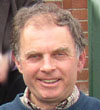
Harry was born in 1944 in the town of Monmouth in the Welsh Marches. He trained as a botanist in London and Bristol, and then spent over 30 years as a crop physiologist near Aberystwyth, Ceredigion.
He has painted off-and-on all his life. Following retirement he has concentrated on representing the countryside around his home near the Dyfi estuary in oil, acrylic and pastel. He particularly enjoys painting places he knows very well from walking his two ageing dogs, now passed on to another place.
He is married to Dot, another member of the group, and you can see more of their work on their own website.
We hope you enjoy browsing our galleries. Why not bookmark us, and tell your friends.
Page updated 19 Aug 2012